Research & Survey Analysis Platform
Project Overview
An AI-powered research and survey analysis platform built to manage participant interviews, multilingual meeting workflows, transcript generation, and insight-based reporting. The system uses secure in-house AI models to turn interview and homework responses into structured, exportable analysis reports — without sending sensitive data to third-party AI services. Built and continuously expanded for a long-term client since 2020.
The Challenge
- Managing large volumes of participant interviews across multiple projects and languages required a structured, scalable digital workflow.
- Generating accurate transcripts from multilingual audio without relying on third-party AI services was a hard technical constraint.
- Turning raw interview responses into structured insight reports was manual, time-consuming, and inconsistent across research teams.
- Meeting workflows needed real interpreter and backroom functionality for multilingual research sessions.
- Data privacy requirements ruled out sending sensitive interview and homework data to external AI APIs.
Our Solution
- Built a Zoom-based meeting workflow with full interpreter channels, backroom functionality, and meeting recording management for structured multilingual sessions.
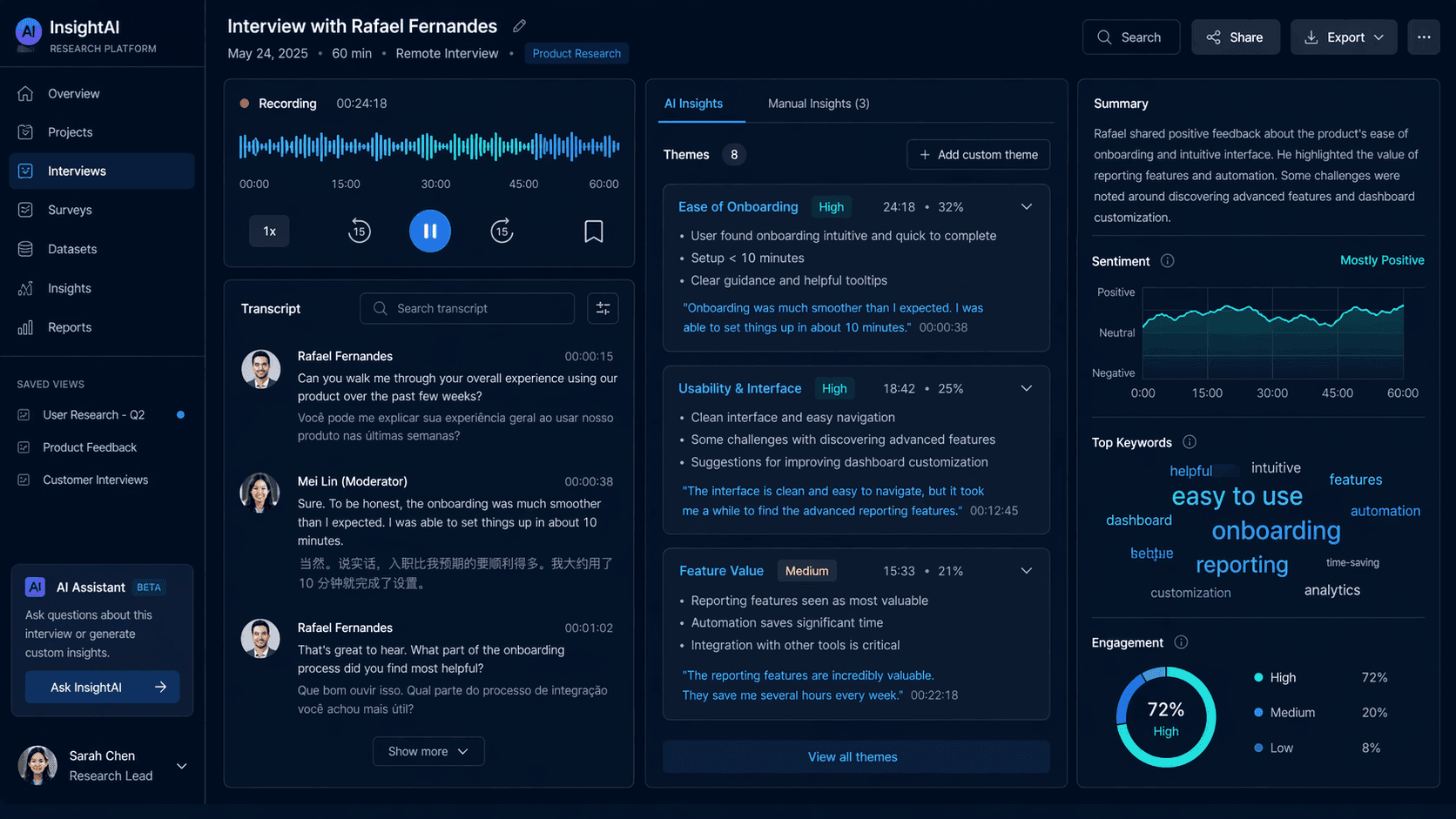
- Deployed Whisper locally for accurate, speaker-aware transcription with speaker diarization and no dependency on external APIs.
- Integrated a locally deployed LLaMA model for insight generation, grouping, and analysis — fully within the client's own infrastructure.
- Automated report export in PPT, Word, and video formats directly from the platform for researcher and client delivery.
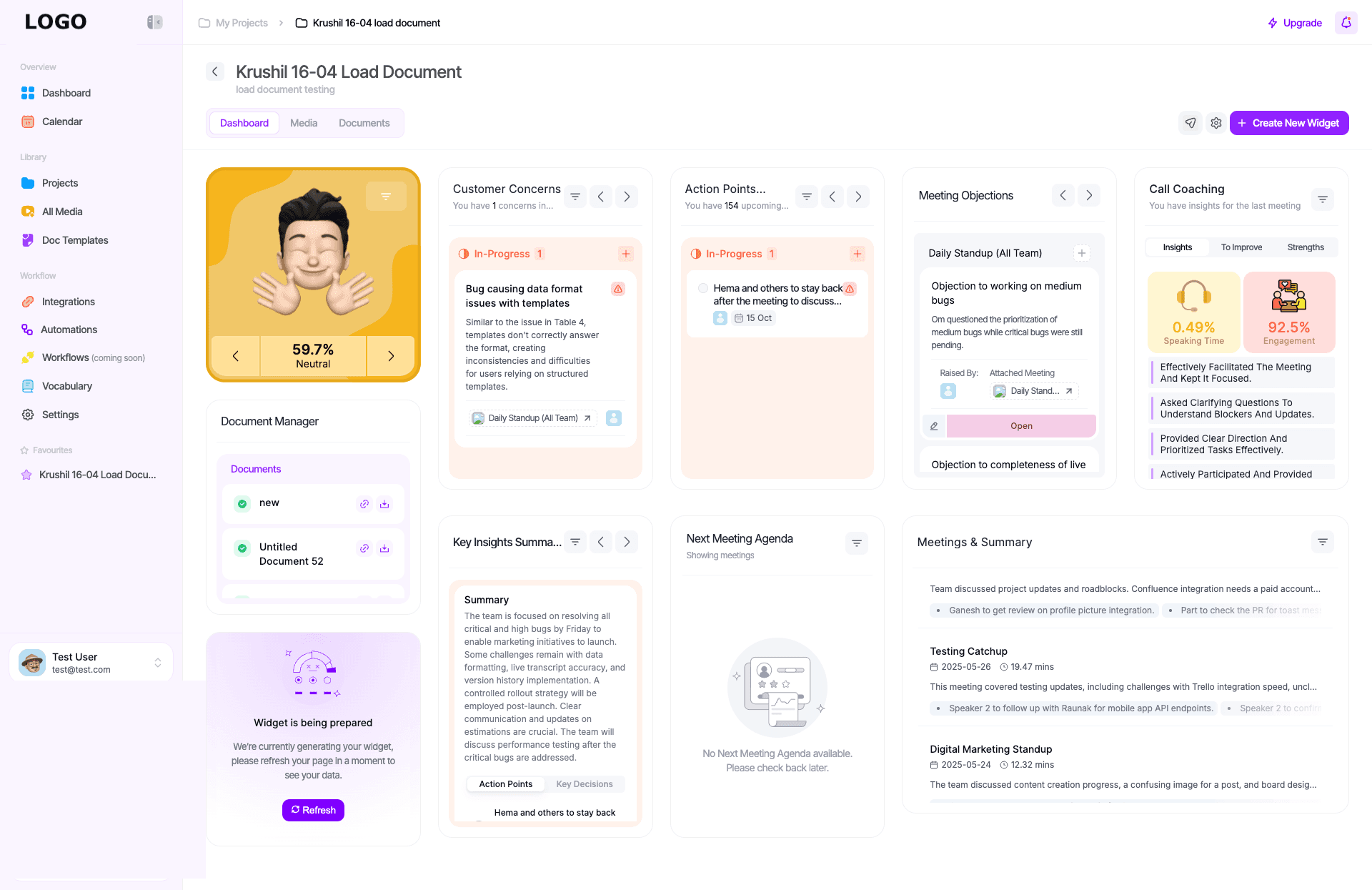
- Built a project-context chat system allowing researchers to query insights and summaries from within any active project.
Technical Approach
The central architectural constraint on this project was data privacy. The client — a research and insights agency — works with sensitive participant data across multiple concurrent studies. Sending interview audio or homework responses to a cloud-based AI API was categorically off the table. This constraint shaped every technology decision we made.
For transcription, we deployed OpenAI's Whisper model locally on the client's own infrastructure rather than using the Whisper API. This gave us accurate, multilingual speech-to-text with speaker diarization — identifying who said what across multi-participant research sessions — without any audio leaving the client's environment. The local deployment required careful optimisation for throughput, since transcription jobs run concurrently across multiple active projects. We built a job queue system that manages transcription workloads efficiently, prioritising active sessions while processing background uploads in parallel.
For insight generation and analysis, we integrated a locally deployed LLaMA model connected to a ChromaDB vector store. Each project's transcripts and homework responses are embedded and stored in the vector database, giving the model retrieval access to all relevant project context when generating insights, groupings, and analysis reports. The model produces structured outputs — insight clusters, sentiment breakdowns, key themes — that researchers can review, edit, and export directly from the platform in PPT, Word, or video format. The project-context chat system is built on the same RAG architecture, allowing researchers to ask natural language questions about any active project and receive answers grounded in the actual research data.
The meeting infrastructure was built on the Zoom Video SDK, giving us programmatic control over meeting sessions — including interpreter channels, backroom functionality, and recording management. This was not a simple Zoom embed but a full custom integration that handles multilingual meeting flows where interpreters work in dedicated channels, observers can join backroom views, and all recordings are automatically routed into the transcription pipeline on session close. The platform has been in continuous production since 2020 and has expanded significantly as the client's research volume and workflow complexity has grown.
Key Features
Zoom Meeting Workflows
Custom Zoom integration with interpreter channels, backroom functionality, and meeting recording management for structured multilingual research sessions.
In-House Whisper Transcription
Locally deployed Whisper model for accurate audio transcription with speaker diarization — no third-party API dependency, keeping all data private.
LLaMA-Powered Insight Generation
Locally deployed LLaMA model that processes transcripts, groups insights, and generates structured analysis reports with full project context awareness.
Multi-Format Report Export
One-click export of analysis reports in PPT, Word, and video formats for seamless researcher and client delivery directly from the platform.
Project-Context Chat System
AI chat interface that allows researchers to query insights, summaries, and key findings within any active project without leaving the platform.
Technologies Used
Outcomes & Results
- Reduced transcript generation time from hours to minutes per session.
- Eliminated third-party AI dependency, keeping all interview and homework data within the client's private infrastructure.
- Enabled structured multilingual research workflows across multiple concurrent projects.
- Ongoing platform engagement since 2020 with continuous feature expansion.
Want to Build Something Like This?
Let's discuss your project requirements and explore the right approach for your business.